2022年4月8日星期五

Wire Tools – Choosing The Right Tool For The Job

Properly outfitting a work bench to work with wire might include more tools than first comes to mind. Using the proper tools will always lead to better results. For this reason, it's important to understand the difference between wire strippers, cutters, and crimpers.
First off, let's get to know the standardized system for measuring diameters of single, solid round electrically conducting wire, the American Wire Gauge (AWG). You will see AWG referenced when determining the appropriate size of some wire tools. With AWG, an increased gauge number signifies a decreasing wire diameter. It is based upon a circular mil system; one mil is equal to 0.001 inch.

Wire Strippers:
Wire strippers are used to remove the insulation from electric wires in order to make contact. There are two primary types: manual and automatic. Of course there is the time consuming scissor method as well as the destructive method of biting off the insulation that can result in pain and a hefty dental bill. We don't recommend either of the latter two methods.
A manual wire stripper has opposing blades like a pair of scissors, but has a notch in the middle of the blades to place the wire. The stripper is then rotated around the wire so the outer insulation comes off while leaving the actual wire intact.
Some wire strippers have varying notch sizes which allow you to strip wires at various AWGs without twisting. There are also automatic wire strippers. They have one side that grips the wire while the other side removes its insulation. Although an automatic stripper greatly reduces the effort required, it can also break thinner wires so they are not suited for all applications. When choosing a stripper, make sure that it has a comfortable grip, cleanly removes insulation from wires, and that it keeps the actual wire intact.
Wire Stripper


Wire Cutters:
Wire cutters are commonly used to cut copper, brass, iron, aluminum, and steel wire. Some wire cutters have insulated handles which ensure that you will not get shocked from the wires you’re working with.
Diagonal cutters have intersecting jaws that cut the wire at an angle, leaving a flat tip. Electricians commonly refer to these as flush cutters in order to differentiate them from symmetrical cutters, which leave a pointed tip. Unlike a symmetrical cutter, a flush cutter allows you to cut a wire very close to its base.

Wire Crimpers:
Crimping is often used to affix a connector to the end of a cable. Wire crimpers look like a pair of pliers, but join two pieces of metal or other ductile materials (such as wire to a metal plate) together. A crimper deforms one or both of the pieces, which holds them together. Some crimpers are ratcheted, meaning the pieces you are working with will not be released until a threshold pressure is delivered. Ratcheted crimpers sometimes come with interchangeable dies that allow you to crimp connectors of varying widths. When looking for a crimper, be sure to verify the types of wire or cable it is capable of crimping.


The correct tool to use depends on the job at hand so avoid ruining a good project with a bad tool. Remember that wire strippers are best for removing the insulation from wire, while cutters are best for (you guessed it) cutting wire. Pliers help you reach, bend, grab, cut, hold and loop wire, and crimpers are the best tool to join two pieces of ductile material together.

2022年3月30日星期三

A Complete Guide to Socket Wrenches

This guide aims to explain what socket wrenches and sockets are, what types are available, and how they work.
After reading our guide, you should have a clear and concise understanding of the types and uses of socket wrenches, as well as some answers to many common questions about buying socket sets online.

What are Socket Wrenches?
Socket wrenches are widely used hand tools for easily tightening and loosening common fastening parts such as nuts and bolts. They work much the same as ordinary wrenches and spanners, but the ratcheting mechanism makes it easier to apply torque, reducing strain and fatigue.
While they can be purchased separately to accommodate a wide range of nut and bolt sizes, most DIYers and professionals will choose to purchase a socket wrench kit. These sockets will include many head fittings and adapters suitable for handling a wide range of inch or metric drive sizes and shapes.
Socket wrenches are incredibly multipurpose and handy tools. As a result, you will find them popular with almost all mechanics, carpenters, electricians and many other kinds of tradesmen.


What are Sockets & Socket Sets?
Socket wrenches, whether sold individually or as a socket wrench set, are designed to perform the same tasks as a traditional wrench set. In other words, they are designed to facilitate the tightening and removal of nuts and bolts of various sizes.
Socket wrenches differ from standard wrenches in that they have a built-in ratcheting mechanism. The ratchet design means that when pushed in one direction, the wrench head locks to provide torque, but when pulled in the opposite direction, it can be rotated freely.

This simple ratchet tool mechanism allows greater torque to be continuously applied to the nut or bolt without having to lift and reposition the wrench with each turn. This makes it quicker and easier to completely tighten or loosen a particular fastener, greatly reducing the strain on the user's hands and wrists. It also makes it easier to work in tight spaces, such as under cabinets or behind radiators and other fixtures.
The socket wrench is a simple handle tool with a built-in ratchet mechanism and a head design that usually allows the addition of sockets of various sizes and shapes on one end. The sockets themselves are screwdrivers of different sizes, ready to be mounted on the handle and slid in to drive the various types of bolts and nuts you wish to handle.
Socket wrench sets typically come in a variety of different drive shapes and sizes and are designed to be interchangeable with wrench tools. The best socket sets will include a full range of standard drive shapes and sizes (both inch and metric) with multiple pieces available for any standard nut and bolt type.

Different Types of Socket Wrenches
There are many different types, often differing in terms of their functional settings. However, most have the same basic components - namely a solid-handled torque wrench with a built-in ratcheting socket mechanism.
Most also include a mechanical switch that allows you to reverse the direction of the ratchet mechanism so that torque can be applied clockwise or counterclockwise.
Various adapters are also widely sold - either individually or in multi-piece sets - to provide additional functionality to the basic processed tool.

How Does a Socket Wrench Work?
It works by allowing the user to apply torque in one direction while rotating freely in the opposite direction. This is called a ratchet system and it operates using mechanical gears that lock when turning in one direction, but release when moving in the other direction.
Ratcheting tools are not limited to hexagonal wrenches. You can also get ratchet screwdrivers, T-handle ratchet spanners, and many other types of hand tools. All of these utilize the same basic gear mechanism in some form.

In fact, using a socket wrench eliminates the need to repeatedly change and rotate the tool around the nut or bolt. The work can be done in less time and with less strain on the wrist. It also makes it easier to work on fasteners in tight or hard-to-reach places.


2022年3月24日星期四

C Clamps VS F Clamps

This article brings you some knowledge about C-clamps and F-clamps to help you understand these tips when buying C-clamps and F-clamps.
C-clamp is also called shrimp bow code, G-clamp or clamp, C-clamp for woodworking, etc. It is a hardware tool used to fix various shapes of workpieces, modules and other fixtures. It can be used not only for woodworking and welding, but also for many more jobs.
Nowadays, the C-clamp has a wide range of uses and is very easy to carry and use. Thanks to the cast steel material, the G-clamp is durable, unbreakable and long-lasting.
1. Advantages of C clamp
C clamp adopts screw-in design, which can freely adjust the range to be clamped, and with powerful clamping force. The C clamp is hot-forged from 45 high-quality carbon steel. With overall heat treatment, it is with strong durability and greater strength. Mostly, the C clamp is a small type clamp.
2. Some specifications to pick up the right C clamp
The following C-clamp characteristics will help you choose the C-clamp you need, they are not essential data, but will be useful.
-Maximum opening (also called extension)
-Throat depth (reachable depth)
-Clamping size
-Clamping force and strength
3. How to use a C clamp in your work
Twist the clamps and place the pieces of wood you need to glue or cut or fasten in place. Then twist clockwise to squeeze the wood piece tightly and need to keep it in that position for a few hours.
C-clamps are widely used in the woodworking industry. When you use a C-clamp, there is a tip that you can put a pad on the appearance of the work piece to avoid leaving marks on the work piece. It can be used together with bench vise or other clamps or alone.
If your job requires a tight grip on your metal fabrication or woodworking project, choose this sturdy C-clamp.

Let’s take a look for the tips of F clamps:
F clamps, it is also known as BAR clamps and quick clamps. We can know that the name of F-clamp comes from Type F. Type F-clamp is similar to Type C or G-clamp in function and has a wider throat depth compared to Type C-clamp.
These clamps are used for woodworking filing, held tightly in place with screws or glue, or for welding filing to hold together.
The F-clamp consists of two horizontal rods and one vertical rod. At the end of the clamp, there is a screw to tighten your work. the F clamp is adjustable and it is easy to clamp large wood products without the need for large screws.

1. Usage of F clamps
The F-Clamp is an essential basic tool for woodworking. It can be used for a wide range of applications. In addition to holding wooden workpieces for woodworking, it can also be used as a holder for metalworking. When cutting or sawing round objects like coconuts, the F-Clamp holds them very securely and leaves both hands free.
2. Some data to choose the right F clamp.
You can choose the right size based on the following characteristics of F clamps, which are not necessary but will help.
-Maximum opening (also called reach)
-Throat depth (reachable depth)
-Bar length
-Clamping force and strength
3.How to use an F clamp in a right way
The F-clamp is a very good choice for holding woodworking parts tightly in place. Please note that you must leave enough space between this removable clamp and the surface of your workpiece. This way, you can work very easily and move and remove the workpiece as you wish. Move the tail towards the head, making sure the wood is held tightly in place.
If the clamping force is too strong, the woodwork may be marked or damaged. To avoid this damage, the piece needs a small block or pad.
A pad is required to prevent workpiece damage by the metal adjustable jaws of the F-Clamp. It also distributes the clamping pressure evenly and holds the workpiece evenly. If you clamp correctly, you will always have an extra pair of hands.

I hope these tips will help you choose a better C-clamp and F-clamp. We will continue to discuss other common woodworking hand tools in the future as well. If you have any purchase needs, please contact us. Our team will be happy to assist you.

2022年3月10日星期四

MEASURING TAPES EXPLAINED

Almost everyone on the planet has used a tape measure at some point in their lives. Although the tape measure is a common tool, the choice can be daunting. With so many tape measures to choose from, it can be overwhelming. In this article, we will examine the various options and offer some tips to help you decide on the best tape measure.


Outer Housing

First, let us explain the types of housing. The housing is the spool onto which the measure is wound. There are two types of housings: open and closed. The open case makes it ideal for outdoor use. Even if debris gets caught in the tape, it is easy to clean, and most open cassettes can be washed with soap and water. Some open models have a rubber spatula-type handle for a comfortable and sturdy grip.
The enclosed housing measure is ideal for indoor use. Its compact size eliminates the need to worry about debris. The sealed housing protects the tape when not in use. Most have a belt clip and lock so there is no worry about the blade retracting during use.
The Blade
The next thing to consider is the "blade". This is the tape that actually fills in the dimensions. There are two common types of tape materials: steel and fiberglass. Both options have advantages and disadvantages. Most pocket measures use metal blades. More durable and longer-lasting than fiberglass. Metal tapes do not stretch, but are susceptible to extreme heat. Many are coated with nylon or lacquer to protect the tape from rust and abrasion. The more frequent the coating, the longer the tape will last.
Fiberglass measuring tape is inexpensive and does not rust. It will stretch if too much tension is applied. Tapes with a high number of glass fibers are stronger and return to their original size when force is applied.
A Few More Things to Consider when Selecting a Measuring Tape
-Metal blades conduct electricity, so if you are working in an area where electricity is present, you may want to choose a fiberglass blade.
-When working in windy areas. The longer the blade extends, the more susceptible it is to wind. Alternatively, thinner blades are lighter and less susceptible to wind.
- "Protrusion" is how far the tape can be extended before it "breaks" or bends on its own.
Units of measurement
-Imperial (English) = feet and inches, usually 1/8 or 1/16. the official unit of measurement in the United States.
-Engineer's (tenths) = feet, tenths and 100ths. Most commonly used for engineers, in this unit of measurement, feet are divided into 10'ths and 100th.
-Metric system (SI) = meters, decimeters, centimeters and millimeters. The official unit of measurement for every country except Liberia, Myanmar and the United States.
If you need more than one unit, don't worry about conversion. Some tapes have two different units on each side.
The Tape End
The measure has a choice of "ends" depending on how it is used. Hooks can be hung on the corners or edges of the board. Most hooks have a small notch to hook onto a fingernail. On some straps, the hooks can be slid to adjust the width. Loop ends are another good option. They can be installed on poles, stakes, or nails. They are also less likely to entangle debris.
Some measuring tapes do not start at the zero point of the cutting edge. Sometimes they start one foot behind the other. This is called an offset zero or "dead foot" (because the first foot of the blade is not marked). This is useful when the end of the tape cannot be placed directly at the starting point. Simply drive a stake one foot away from the starting point and align the zero point with the starting point of the measurement.

2022年3月7日星期一

What Is a Spring Clamp?

A spring clamp is a handy clamp that uses spring pressure to hold down a material. They are often used to cut, secure, or glue materials. There are many useful options for clamps to use in your project. Each clamp has its own purpose and function, which sets it apart from other clamps.


What is a spring clamp? Spring clamps, also known as hand clamps, work in a similar way to clips. This allows the jaws to be opened further when holding larger workpieces. In some models, the jaws do not close in parallel: instead, the clamp uses a clamping pattern to hold the workpiece in its gripper.
A spring clamp is a clamp that uses pressure from a metal spring to hold materials at both ends. They are typically used to clamp wood, metal, plastic, fabric, etc. at a single point. They are very effective for clamping stop blocks on fences and jigs, holding power cords, quick and easy clamping, and gluing woodworking projects.
This clamp is small in size, but it is actually very strong, which makes it one of the first types of clamps that most woodworkers collect.The jaws of the clamps are usually padded with plastic or rubber pads to protect them from damaging the material they are working with.
Consequently, how do spring clamps work?
Whether it is used to clamp one object to a work surface or to hold two or more objects together, the purpose of the clamp is to provide the user with a firm grip to accomplish the desired task. When the screw is turned, the clamp closes around the workpiece and applies pressure to hold it securely in place.
Clamps come in a variety of shapes and sizes, and their primary use is to hold pieces of wood in place until the glue dries. Spring clamps can also be used to hold wood in place when sawing. To use clamps, you need to know what type of clamp you are using first.
What do you use spring clamps for?
Spring clamps are often used by woodworkers and carpenters to hold bulky or delicate objects that may be too tricky for larger clamps. It is perfect for use at home for some domestic work.
Are spring clamps safe?
Spring clamps are very safe. They have a quick and easy loading and releasing action and can be used at any level of woodworking.
How to measure spring clamps?
The length of a spring clamp is from the jaw to the end of the handle. By measuring this length, the size of the spring clip is classified. These sizes range from 3/4" to over 9". The most common size is the 6" spring clamp.

2022年2月16日星期三

How to Choose the Right Drill Bit Sets?


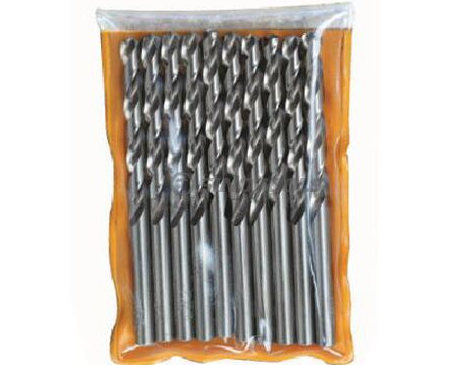
Drill Bit Set


Drill bit sets can be found in different shapes and sizes however essentially they're simply utilized for making holes, so why the difference in cost? There are hundreds of low-cost top-quality bits that have flooded the marketplace so right here's a guide to which attributes to look for so you can divide the good from the bad.


Drill bit anatomy

Looking at the anatomy of your drill bit sets is another indication of the quality. Cheaper drill bits will have more land. The web on a bit is the actual thickness on the drill point and this thickness increases as the bit are sharpened.


Prove your metal

Just as showing your mettle is about bravery and strength of character, the metal that goes into drill bits is an important characteristic to look for. Standard bits are typically made of High-Speed Steel (HSS) which is hard and resistant to wear. HSS can also tolerate higher levels of heat. This is an essential feature to have as the friction generated when drilling is obviously considerable. Drill bits made of inferior quality metals will quickly lose their edge as they get hot. In the end, you’ll have to replace them more frequently and ultimately this results in poorer quality holes.


A point to make

The point of standard drill bits is 118°. These are best for drilling materials such as wood, plastic, and softer metals. With more expensive drill bits such as the M2 set, you’ll see that the geometry is slightly different and they have a finer point. This enables the tip to cut into the material faster. For harder materials, the bit will have a flattering point, normally 135°.


Confirm the material to be processed

Different materials require different twist drill bits. Although many brands of twist drill bits are currently pursuing versatility, no brand can meet all the needs so far. Therefore, if you want to improve the quality of your products and reduce the purchase cost, it is important to choose the right twist drill bit.


Welcome to Sinotools

As one of the biggest hand tools & hardware manufacturers and exporters in China, Hebei Sinotools Industrial Co.,Ltd. enjoys an excellent business relationship with our customers around the world. During the past 20 years, we have been dedicated to providing quality products at reasonable prices and professional trading services. We specialize in an extensive range of hand tools & hardware products. If you have any inquiries, our friendly staff are always available to answer all of them. Click here to see us in a panoramic view!

2022年2月8日星期二

Cutters & Snips Knife Cutters Supplier

China Cutter Knife Exporter


Bolt croppers are designed for cutting wire, chains, padlocks and bolts. Most bolt cutters have hardened steel adjustable jaws. Having short blades and long handles with compound hinges allows maximum leverage and cutting force. The blades can vary according to the type of job, the "centre cut" is the most common. Bolt cutters are usually available in 12, 14, 18, 24, 30, 36 and 42 inches in length. The length is measured from the tip of the jaw to the end of the handle.

Tinman’s Snips are ideal for cutting thin sheet metal, such as aluminium, copper and brass. They are operated by hand and are normally used after the sheet metal has been softened through the annealing process. So if you have any enquiries, please feel free to contact us.


QUALITY CONTROL

We hope the products we manufacture can satisfy our customers and be competitive in customers' markets, in order to achieve this objective, we have strict Quality Control Procedure on the production line, the QC will be applied strictly from the raw material to the logo making and goods packing.

Professional inspectors from SINOTOOLS will carry on a systematic inspection before the goods are dispatched, our normative inspection procedure normally includes the following sections:

• Checking goods according to the customers' technical requirement and   commercial contract, controlling the quality and/or consistency of goods

• Examining the main points, such as surface treatment, material strength, logo and color consistency etc.

• Verifying compliance with the standards of the destination country (e.g. ASME or CE)


https://www.sinotools.com/CuttersandTinmansSnips/