2021年1月22日星期五

Types of Hammers and Their Uses (Part 1)

 One of the most common tools we use in most projects throughout our lives is a hammer. It's a tool that allows us to work with materials, destroy them often, reshape them later, and create something better and more beautiful.

Choosing the right choice can be tricky because there are so many options available. In this article, Hammers Exporter China introduces the most popular types of Hammers you can find.

Different kinds of professional hammers

01. Claw hammer

The most popular hammer to get through is the Claw Hammers. If you've ever worked as a handyman around your house, you've probably used it.

It is easy to find in most garages because of its perfect balance between comfort and weight and its powerful ability to generate an impact on most surfaces and produce high-quality results.

For their design, manufacturers usually use wood, fiberglass, and sometimes steel handles. It comes with or without a rubber handle, but we recommend that you purchase a handle with a rubber handle for added comfort. Its total weight is between 455-680 grams.

The claws usually have a curved design and are combined with a V-shaped shape, ideal for pulling nails out of wood. We can use this claw to lever the floor and other surfaces that need to be levered.

However, in all cases, we must always be careful, as excessive force may weaken the joints of the handle and its head.

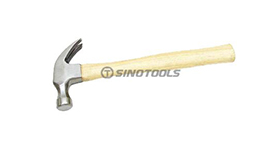
Claw Hammers

Claw Hammers

02. Roundhead hammer

The hammer has a circular design and one of its main purposes is to help us shape the metal and close the rivets. Therefore, the hammer performs well in professional applications, and its design makes it versatile enough to be used in different types of applications.

For example, we can mention that engineers are the target audience for using it.

In most cases, the handle is wood. It comes in different weights and shapes. It is an effective tool for both professional and domestic use.

03.Straight Pein

Another metal hammer. Of course, you can use it for different applications and it will perform very well, but the cross pin is very effective for the pins and tacks in the boot panel. For handles, it features wood.

04.Cross Pein Pin Hammer

This hammer attempts to improve the comfort of the previous hammer while also reducing weight and providing a comfortable design. It weighs about 55 grams (or 4 ounces). It performs well and produces high-quality results, especially in cabinetwork and light carpentry.


2021年1月14日星期四

Essential Knowledge of Circular Saw Blades (Part 3)

 ■Dado saw blade

Table saws (and some rocker saws) can use the combined stacked dado kit.

For cutting 7/8" wide single-lane wall panels (skirts), grooves and notches, depending on the machine. These kits include two external cutting blades (one with left helical teeth and the other facing right Oblique teeth) and internal saw blades (with flat top teeth). Stack any combination of internal saw blades between the external saw blades to obtain the required passing width.

■Aperture

The size of the hole in the center of each circular saw blade matches the saw shaft (saw blade driveshaft). Most blades with a diameter of 10 inches or smaller are mounted on a 5/8-inch saw shaft, but 12-inch blades use a 1-inch saw shaft. If the saw shaft and the inner hole of the saw blade do not match, you need to use a reducing ring to reduce the diameter. This is due to the different table saw shaft standards in Europe and the United States. North America often uses inch shaft diameters, and the EU often uses metric systems. Shaft diameter size, and because of the difference in the standards they define for table saws, there will be different shaft sizes such as 15.875mm, 25mm, 30mm, etc. In China, because sliding table saws, circular saws, etc. often adopt European standards, our market The saw blades that are purchased are usually 25mm and 30mm shaft holes.

■Saw Blade Coating

Some saw blades have so-called coatings on the substrate, such as titanium plating, nitride black, chromium nitride color, etc., such coatings are designed to reduce friction, rust, and resin accumulation. Of course, some special saw blades are coated with metal or PTFE to resist the deformation of the saw blade substrate, maintain the hardness of the saw blade, and prevent heat generation. This kind of coating can effectively protect the saw blade and eliminate sawdust in time. The high-quality coating keeps the saw blade sharp for longer and consumes less energy. There are two different types of coatings that can be used for saw blades, one for the saw blade substrate and the other for the saw teeth. When the saw blade has two types of coatings, they will be different coatings because they achieve different purposes.

The saw blade substrate is coated with a protective layer to prevent rust or friction. Modern metal processing has developed a variety of manufacturing methods and used different alloys in the casting process to improve durability. The type of coating depends on the hardness of the metal making the saw blade, the rake angle, the back angle (clearance angle), tooth shape design, bonding material, and general-purpose. Some manufacturers paint saw blade substrates, mostly blue, red or orange, to provide brand recognition, but they can still provide rust-proof boards. Some high-cost saw blades are coated with polytetrafluoroethylene (PTFE) to reduce friction. This type of coating can be very valuable because the greatest friction comes from the debris clamped between the saw blade plate and the material being cut. By coating the saw blade substrate, these fragments will not stick to the saw blade. In addition, sometimes the material will squeeze the saw blade, even if the saw blade substrate is thinner than the teeth, especially for hand-held circular saws and electric saws.

The serrated coating is an important part of extending the life of the saw blade. Wood products are highly fibrous and tend to dull any saw blade. When cutting hard materials such as composite materials or plywood, the temperature is easily close to the melting point. This requires additional overheat protection. The harder the material used on the teeth, the longer the blade will last without dulling the teeth. Therefore, some extremely hard materials are used to cover the serrations.

Carbide serrations can also be improved by coating. Tungsten, titanium, cobalt, or vanadium can be electroplated on the cemented carbide to increase its surface hardness, reduce serration wear, and maintain sharpness for longer. The material can be identified by the color of the saw blade. In addition to permanent sharpness, this coating also has the characteristics of clean cutting, has a certain anti-corrosion performance, and will not damage the internal structure of the metal. The only disadvantage of carbide saw blades is that the coating is lost after re-sharpening.
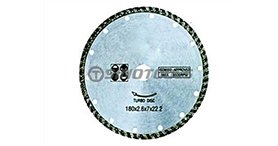
Circular Saw Blade

Circular Saw Blade

■Expansion tank

In addition to the saw blade coating, in order to release the residual welding stress of the saw blade, eliminate the expansion of the saw blade body and reduce chattering, the lines and holes cut by the laser and the expansion grooves, vibration holes, etc., are well passed through the air. Convection measures to eliminate the heating of the saw blade, of course, also have the effect of reducing vibration and noise. Some saw blades are also filled with soft metal in the grooves and pores as a means of damping. These are the saw blade protection measures developed by saw blade manufacturers.

The expansion slot is a laser cutting slot, you can also call it an expansion joint, designed to disperse heat and prevent the saw blade from overheating and deforming. The sawing process will cause a lot of friction even under ideal conditions. When the teeth of the saw blade remove material, they are also rubbing the sides of the saw blade. The tooth tip rubs against the material on the cutting path. This friction can generate amazing heat, enough to scorch wood and even twist saw blades. The saw blade is quite hot even after cutting; when trying to remove the saw blade from the table saw, tap it with your hand and it will be easily burned. The best way to avoid burns is to cool down after shutdown. However, this does not solve the problem of overheating.

As the temperature of the metal increases, the metal shows a tendency to expand. The temperature of the saw blade is usually not uniform on the saw blade, forcing it to expand unevenly. Generally speaking, the saw blade substrate is hotter than the saw teeth, although the saw teeth are experiencing most of the friction. Even though the sawtooth has the greatest friction, it can be cooled by air movement. Therefore, when the saw blade substrate expands, it needs to be released. The outer edge of the saw blade substrate, where the saw teeth are attached, is not so hot, so there is no such big expansion. The saw blade substrate is deformed to the side, which is the cause of warpage. Saw blade warping becomes a waste product, so it is necessary to prevent them from expanding unevenly to avoid the risk of warping. One method is to use high-density alloys in the saw blade substrate. The other is to cut expansion grooves on the saw blade substrate by laser. Allow the saw blade to expand "inside". Although these cut grooves seem to be for artistic decoration, they can absorb the metal expansion and prevent warping of the saw blade.

Finally, to explain the knowledge of the saw blade thoroughly, we need to further explore the knowledge points of speed, noise, feed rate, tooth gap, sawing ability, substrate material, sawtooth shoulder, and so on. However, I think for beginner woodworking enthusiasts, the above ten points are enough to help you correctly understand the saw blade, choose the saw blade and use the saw blade. We are a China Circular Saw Blades supplier, if you are interested in our products, please feel free to contact us.
 

2021年1月6日星期三

Essential Knowledge of Circular Saw Blades (Part 2)

 ■Number of teeth

Except for grinding saws used for cutting ferrous metals, glass, and ceramic tiles, all circular saw blades have many teeth scattered on the circumference. The number of teeth on the saw blade is one of the most obvious characteristics of the intended use of the saw blade, and it is also one of the biggest issues to consider when choosing a saw blade. It is usually the first parameter that should be considered when buying a saw blade. This quantity will describe whether it is designed for longitudinal or transverse cutting, wood or masonry, thick or thin materials. There are two extreme types: saw blades with fewer but larger teeth, with larger spacing between each tooth, used for longitudinal cutting; and saw blades with many small teeth, used for cross-cutting.

Saw blades designed for slitting generally have fewer teeth. They are designed to take a larger piece of sawdust from the wood or "bite" it, cutting faster. Since slitting is easier than cross-cutting, having a saw blade that can cut larger chips can improve efficiency without sacrificing cutting quality. In order to adapt to this rapid cutting, according to the size and quality of the saw blade, the number of saw teeth of the longitudinal cutting saw blade will be less than 40, more than 18 teeth, and there are large tooth grooves between. On the other hand, when saw blades are used for cross-cutting, they need to cut the grain of the wood so that they are smaller bites and produce smaller chips.. This requires more serrations instead of large cogging. The cross-cut saw blade has 60 to 150 teeth. The more teeth the saw blade has, the smoother the cut. Hollow ground or plywood saw blades have roughly the same number of teeth, but please note that the performance of these saw blades is significantly different from what is considered a combination/multipurpose saw blade. Combination saw blades are between these two numbers, ranging from 40 to 80 teeth. These saw blades are a compromise solution designed to allow the same blade to be used for longitudinal and cross-cutting.

For most woodworkers, the number of teeth of the saw blade is the most important part when choosing a saw blade. Generally speaking, a higher number of teeth indicates a higher quality of the saw blade, because each tooth added to the saw blade increases the cost of the saw blade. This is especially true for carbide saw blades. However, just the number of sawteeth is not enough. The best way to find a saw blade that suits your needs is to cut 25.4mm thick wood at any height.

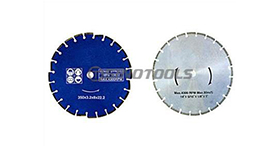
Circular Saw Blades

Circular Saw Blades

■Tooth

The tooth groove is the circular space in the saw blade base plate between the saw teeth. This space is designed to take away debris such as sawdust and wood chips. Prevent the saw blade from clogging. The size of the tooth groove on the saw blade is closely related to the feed speed factor. The cross-cut saw blade has more teeth, so the tooth groove is smaller, and the heavy-duty saw blade and the longitudinal saw blade have a larger tooth space between each tooth, which can quickly remove wood chips. The tooth groove must be used to prevent the saw blade from overheating and the material being cut from burning. If there is not a large enough gullet, the sawdust will be trapped, stick to the saw blade, and increase friction, thereby generating excess heat. Since wood chips burn more easily than solid wood, it is actually possible (though not common) to catch fire in this way. If there is enough overheating, the saw blade will begin to warp, which increases the thickness of the saw path and eventually damages the saw blade. Therefore, it is not recommended to try to use a cross-cut saw blade for longitudinal cutting. The tooth grooves on the cross-cutting saw blade are small, and the more frequent saw teeth are accompanied by smaller teeth, and the ability of the saw teeth is not enough to transport a large number of chips and wood chips. The cutting speed of the cross-cut saw blade is slow, and there is enough time to discharge the waste, so there is no need for large tooth grooves. But forcing the wood to pass through the saw blade can also block up due to the accumulation of sawdust and sawdust.

Combination saw blades can be used for longitudinal and transverse cutting. When used for slitting, the saw blade will accumulate too much sawdust in the saw gap. Some combined saw blades solve the problem of chip accumulation by skipping teeth and adding an extra deep tooth groove after every five teeth. The deep tooth grooves between the sawtooth profile groups can provide a place for excess sawdust to be removed from the saw grooves, thereby eliminating overheating problems.

Compared with hardwoods, softwoods tend to produce larger, looser piles of wood chips. Therefore, for cork, the problem of wood chips accumulating in the tooth grooves will be more serious. If you are cutting damp wood, the problem will increase because the dampness of the wood will cause the wood chips to clump together instead of falling off the teeth. As the saw blade becomes more and more clogged, the temperature will rise, which can only be noticed when the table saw begins to deform or the saw blade begins to bend. The reason for the opposite situation is the obvious error, which is less likely to occur: when the slitting saw blade is incorrectly used for cross-cutting, the serrations caused by the slitting saw blade are not neatly handled, a lot of waste, and a lot of waste and large Block of sawdust, which prevents people from using it. Although the grade of the saw blade is not determined by the size of its tooth groove, it is easy to see when inspecting the saw blade. Saw blade designers consider the intended use of the saw blade and ensure that they provide sufficient tooth spaces for the intended use. When the saw blade is used outside of its intended purpose, especially when the cross-cutting blade is used for slitting, the tooth space may be insufficient.

We are China Hand Tools Manufacturer. If you are interested in our products, please feel free to contact us.

2020年12月28日星期一

Essential Knowledge of Circular Saw Blades (Part 1)

 Although they look similar, saw blades are designed for specific tools and uses!

In addition to the brand of saw blades, choosing the right type of Circular Saw Blade determines whether a high-quality saw can be obtained, and in most cases, the saw blade provided with the new tool may be more suitable for on-site cutting. In fact, in the wood processing process, due to the difference in equipment, the use occasions and functions of saw blades are also different. In order to focus on the discussion of saw blades for workshops such as table saws, we are not concerned about the wider uses and materials of saw blades. , Specifications, technical parameters, and types for detailed discussion.

If you want to find the right saw blade, you must understand the following ten points. China Circular Saw Blades supplier will introduce to you:

■Saw blade diameter

Each type of mechanical equipment and hand-held power tools usually only accept saw blades of a specific size: for table saws, usually 254mm (usually 250mm for saw blades sold in the domestic market); for hand-held circular saws, usually 165mm or 190mm; for miter cutting Saws and rocker saws, usually 254mm or 304mm; for sliding table saws, usually 315mm or 350mm, or even larger diameter saw blades. These tools and equipment can use smaller saw blades (such as dado saw blades), but if the use range of the saw blade is set, do not try to use a larger saw blade. It may be difficult to find replacement saw blades of certain sizes, so consider whether the saw blade is suitable and usable before buying.

■Saw/saw road

The saw slit/saw path is also called notch. The “cut” of the saw blade refers to the thickness of the groove that the saw blade will cut. It is also usually used to define the thickness of the saw blade itself or at least the widest point on the saw blade. Thickness affects cutting width, cost, power consumption, and wood loss during processing. The cut is usually wider than the saw blade base. If you look at the structure of the carbide circular saw blade, you will see that the saw teeth are welded to the saw blade and are thicker than the saw blade body. For high-speed steel saw blades, although the saw path is still thicker than the saw blade, the saw teeth and the saw blade are integrated. This is due to the "offset" of the teeth and the blade. This means that they are slightly bent to one side, alternating from one tooth to the next. Another thing that may affect the saw gap is the flatness of the saw blade. If the saw blade is slightly warped, the teeth will not follow each other in exactly the same straight line but will swing back and forth, just like a car tire mounted on a curved rim. This oscillation actually causes the saw blade to cut teeth that are wider than the allowable thickness of the teeth.

Since metal plates are usually rolled in a forging plant, then unrolled and cut into plates, it may not be completely flat before manufacturing. The eye may not see the bending amount of the saw blade, but it may still cause the sawing groove to be larger than the thickness of the saw blade and teeth. Very high-grade saw blades are made of unrolled steel from steel mills. This kind of steel is much more expensive than ordinary steel, and the processing technology during processing is complicated. Saw blades made of this steel will not swing so that the cutting is as smooth and clean as possible.

The thicker the saw blade, the less likely it is to bend (the wider the cut). Therefore, heavy-duty fixed table saws usually use 3.2mm saw blades, because the power provided by this type of table saw can easily cut high-density hardwood. For table saws, miter saws, and radial saws with a motor rated power of 1.1kw or less, use thin-cut saw blades (approximately 2.4mm) to obtain greater performance power. Portable circular saws, especially lithium battery hand-held circular saws, use even thinner blades. It is almost impossible to find a 3.2mm saw blade for a portable saw. These ultra-thin saw blades exert less stress on the saw motor and will not bend significantly due to their smaller diameter.

Circular Saw Blade

Circular Saw Blade

■Tooth type

Nowadays, almost all saw blades used have carbide teeth, and their sharpness is longer than that of all-saw blades. The manufacturer grinds the teeth into the shape that best suits the specific cutting action. If you look closely at the surface of the teeth, you will see that the teeth are ground into a certain shape. For example, the use of alternating left and right beveled teeth (ATB) can minimize the edge chipping of wood and veneer plywood. This tooth profile is used for general purpose, crosscut and plywood/melamine saw blades. The same is true for crosscut saws in our hand saws. Class tooth shape. The flat-tooth (FTG) saw blade used for slitting has flat teeth and no bevel, which helps to remove debris on the kerf. The combined tooth profile uses a mixture of ATB and FTG teeth and is better than general saw blades in cross-cutting, but it will not chip. Saw blades for cutting hard surface countertops or melamine-coated particleboard use a trapezoidal flat tooth (TCG) shape to prevent edge chipping.

2020年12月20日星期日

Introduction to Power Tool Purchase Skills

 How to choose China Power Tools?

(1) First of all, according to your own needs, the difference is whether it is for home use or professional use. Generally, the difference between professional power tools and general household power tools is mainly in power. Professional power tools have higher power than general household power tools. The tool power is small, the input power is also small and compact, and the highly integrated electric tools are more convenient to use than the large and single-function products. Therefore, try to choose power tools that are rich in functions, small in size, simple in structure, and easy to store. When purchasing power tools, you need to buy power tools with clear packaging and no damage. Power tools that are purchased have a normal appearance, complete plastic parts, and no Obvious shadows and dents, no scratches or bumps, the relevant paint is smooth and beautiful, no defects, no oil and stains on the surface of the whole machine, the handle of the switch is flat, the length of the wire and cable is generally not less than 2M power tools. The relevant signs are clear and complete. , Parameters, manufacturers, certificates, etc. are all equipped with hand-held tools, turn on the power, frequently operate the switch to start the tool frequently, and observe whether the on-off function of the tool switch is reliable and whether it affects the TV/fluorescent lamp on site. Determine whether the tool is equipped with an anti-interference suppressor. The power tool is energized and run for 1 minute, feel the vibration, and observe whether the reversing spark and the air inlet are normal.

(2) Choose power tools with noise within the allowable range.

(3) Choose power tools that are easy to maintain and get accessories.

(4) When selecting power tools, pay attention to the power supply voltage used. Generally, hand-held power tools need to provide 22V city power as an energy drive. Do not connect to 380V industrial power, otherwise, the machine will be damaged.

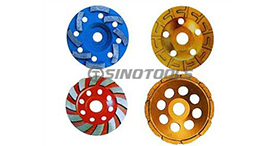
China Power Tools

China Power Tools

Power tools purchase skills

1. If you often drill holes in concrete walls, a two-kilogram electric hammer is your best choice. Due to the cylinder structure of the electric hammer, the hammering force is very high, and it has a hammering frequency of 1000 to 3000 per minute, which can generate significant force, making it easy for you to drill holes in the concrete wall. Equipped with an adapter rod and a chuck for an ordinary electric drill, it can also complete the function of a hand electric drill, achieving the purpose of one machine with multiple functions. It is a speed-adjustable electric hammer + adapter rod + 13mm electric drill chuck, only a few hundred yuan, coupled with a few commonly used drill bits, then most of the decoration tasks in your home can be completed by yourself.

2. If in addition to concrete drilling, you must also take into account the drilling of wood and metal, and the drilling of concrete is less than ten millimeters, you can consider the impact drill. The impact drill relies on the helical gear to generate impact, and the impact is not as good as the electric hammer.

3. If you often tighten or loosen screws, or punch holes in wooden or iron plates, then you can buy a cordless electric screwdriver, which is the most convenient tool in these two aspects. The rechargeable electric screwdriver plus a set of screwdriver headsets make it easy to get the job at hand.

4. Everyone knows that a hand electric drill is suitable for drilling holes on wood or iron plates, but don't expect it to be useful for drilling holes on concrete walls. It is easy to damage the machine. A hand electric drill is the most economical The electric tools, even if they are imported, only cost a few hundred yuan.

5. Jigsaw. If you have a strong hands-on ability and you can make some furniture or shapes by yourself, then you definitely need a jigsaw. Install a suitable saw blade, wood, iron, plastic, stainless steel, etc. soon. Process your ideal shape under your hand. You can choose various types of jigsaws to create your own shape.

We are china power tools exporter. If you are interested in our products, please feel free to contact us.
2020年12月12日星期六

Development Trend of Garden Tools


China Garden Tools refers to the machinery and equipment involved in gardening, greening and subsequent maintenance, including lawn planting and maintenance machinery, greenfield planting and maintenance machinery, urban tree and shrub planting and maintenance machinery, and flower cultivation Facilities and equipment, garden engineering and professional sports venues and other equipment.

At present, the main consumption areas of the global garden tool market are concentrated in European and American countries, while the garden tool market in Asia is small in scale but develops rapidly.

North American Market

The North American market of garden tools is mainly concentrated in the US market. The United States is the world's largest consumer of garden tools, and its consumption mainly comes from home gardening and public greening. The U.S. economy is relatively developed, the ownership rate of private gardens is relatively high, and home gardens are maintained and operated frequently, such as pruning branches and tidying lawns, and there is a strong demand for garden tools, which drives the development of the garden tool market.

From 2014 to 2019, the US demand for lawn and garden equipment is expected to increase to US$11.7 billion at an average annual growth rate of 3.2%. With the increase in the number of single-family houses and garden facilities, the increase in household and commercial garden equipment has provided strong support for the growth of the garden tool industry.

European market

The European horticulture industry is an active and growing market, which is largely due to the development of European art. In recent years, gardening TV programs and major gardening exhibitions, such as the Chelsea Flower Show, have all contributed to the development of gardening.

China Garden Tools

China Garden Tools

1

Russian market

There are approximately 40 million acres of gardens in Russia, which means that every three Russians have their own courtyard. Since the Soviet era, Russian villas have been accompanied by a courtyard of about 600 square meters, and the head of the household will often grow some fruits and vegetables in the courtyard in warm seasons. Since 2005, Russia’s economic development has reduced the need for individuals to grow edible plants, and at the same time, it has also made people more interested in ornamental gardening, especially those who own high-end houses in cities.

It is estimated that by 2019, Russia's horticultural demand will reach 97 billion rubles. The cultivation of fruits and vegetables will keep customers in constant demand for garden tools, but customers will prefer more cost-effective tools. In Russia, the necessity of garden maintenance will continue to support the high demand for garden care products.

2

British market

According to the British, gardening is a traditional and popular hobby. People's strong interest in house reconstruction gradually extended to the garden, stimulating the development of the market.

In the past ten years, the British gardening market has maintained a good growth trend. The development of British society and the economy, the increase in disposable income, and the aging population are conducive to the development of its horticulture industry. In 2017, the transaction volume of the British gardening supplies distribution market reached 4.9 billion pounds, an increase of 3% over the previous year. British consumers spend up to 5 billion pounds on gardening each year. Although the demand for housing in the United Kingdom is still high, the rate of housing construction and moving activities have been declining in recent years, and the average size of British gardens is also shrinking. Therefore, people tend to choose high-rise residences with smaller spaces and "vertical gardens" are more popular. The use of flower pots that are easy to move and put on the balcony has increased.

3

German market

In Germany, the home and garden market is relatively mature, and new sales usually need to be driven by innovative and personalized products. With more and more people immigrating to Germany, the German population has gradually increased, and the number of families has continued to grow steadily. These favorable demographic factors have played a positive role in the growth of the home and garden market.

Asia market

The Asia-Pacific region will be the fastest-growing region in the global garden tools market, and China, Hong Kong, and India will have a higher compound growth rate. The Chinese market still maintains the largest market share in the Asia-Pacific region. Japan will continue to maintain its position as the second-largest market in the region, but the compound annual growth rate is expected to remain at a low level of 1.6%.

China is the main production base of garden tools in the world. The export market for garden tools has different demands. China Garden Tools Manufacturers need to formulate differentiated product plans based on the different economic and cultural needs of different countries and regions.

2020年12月4日星期五

How to Choose a Saw Blade?

 China Circular Saw Blades supplier shares this article with you.

Saw blade diameter selection:

The diameter of the saw blade is related to the sawing equipment used and the thickness of the sawing workpiece. The diameter of the saw blade is small, and the cutting speed is relatively low; the large diameter of the saw blade has higher requirements on the saw blade and sawing equipment, and the cutting efficiency is also high. The outer diameter of the saw blade is selected according to different circular saw machine models, and the use of a saw blade with the same diameter can effectively improve efficiency and reduce production costs.

Selection of saw blade tooth number:

The number of teeth of a sawtooth, generally speaking, the more cutting edges are cut per unit time, the better the cutting performance. However, the number of teeth should not be too many, and a reasonable number of teeth should be selected according to the thickness of the material to be sawed. The sawing material is thick, the number of teeth is correspondingly small, the sawing material is thin, and the number of teeth is relatively large, but the saw teeth are too dense, and the chip volume between the teeth becomes smaller, causing jamming, which is easy to cause the saw blade to heat up; If the amount is not matched properly, the cutting amount of each tooth is small, which will increase the friction between the cutting edge and the workpiece and affect the service life of the cutting edge. Usually, the tooth spacing is about 15-25mm.

Circular Saw Blade

Circular Saw Blade

Selection of saw blade thickness:

The thickness of the circular saw blade theoretically we hope that the thinner the saw blade, the better, the sawing is actually a consumption. The material of the alloy saw blade base and the process of manufacturing the saw blade determine the thickness of the saw blade. If the thickness is too thin, the saw blade is easy to shake when working, which affects the cutting effect. When choosing the thickness of the saw blade, the stability of the saw blade and the material to be cut should be considered. The thickness required for some special-purpose materials is also specific, and a reasonable thickness should be selected according to the requirements of equipment and workpiece processing.

Can the circular saw blade be reversed when in use?

Can the circular saw blade be reversed when it is in use? Many saw blade users are very random about the installation direction of the saw blade. When the saw blade is disassembled and reinstalled, it does not pay attention to the forward and reverse rotation direction of the saw blade, which reduces the use of the saw blade. life.

Generally speaking, new saw blades without blades do not have forward and reverse directions, because the saw blade mainly depends on the blade to work later. However, the used saw blade should not be reversed as much as possible after unloading and reinstalling.

Because the saw blade is already out of the blade at this time, a regular extension line is dragged behind it to ensure the sharpness during use and also extend the service life of the saw blade.

Now there are some saw blades with sharpened edges on the market. These saw blades have a good appearance. Since the saw blades have been sharpened, it is better to install them in the specified direction during use. However, it is worth noting that this kind of edged saw blade is generally processed by a grinding wheel, and a certain amount has been lost during processing. Therefore, this saw blade improves the use efficiency and reduces the service life of the saw blade.

In short, in the general situation where there is no requirement for very precise cutting, it is a wise choice to choose a saw blade without a blade.